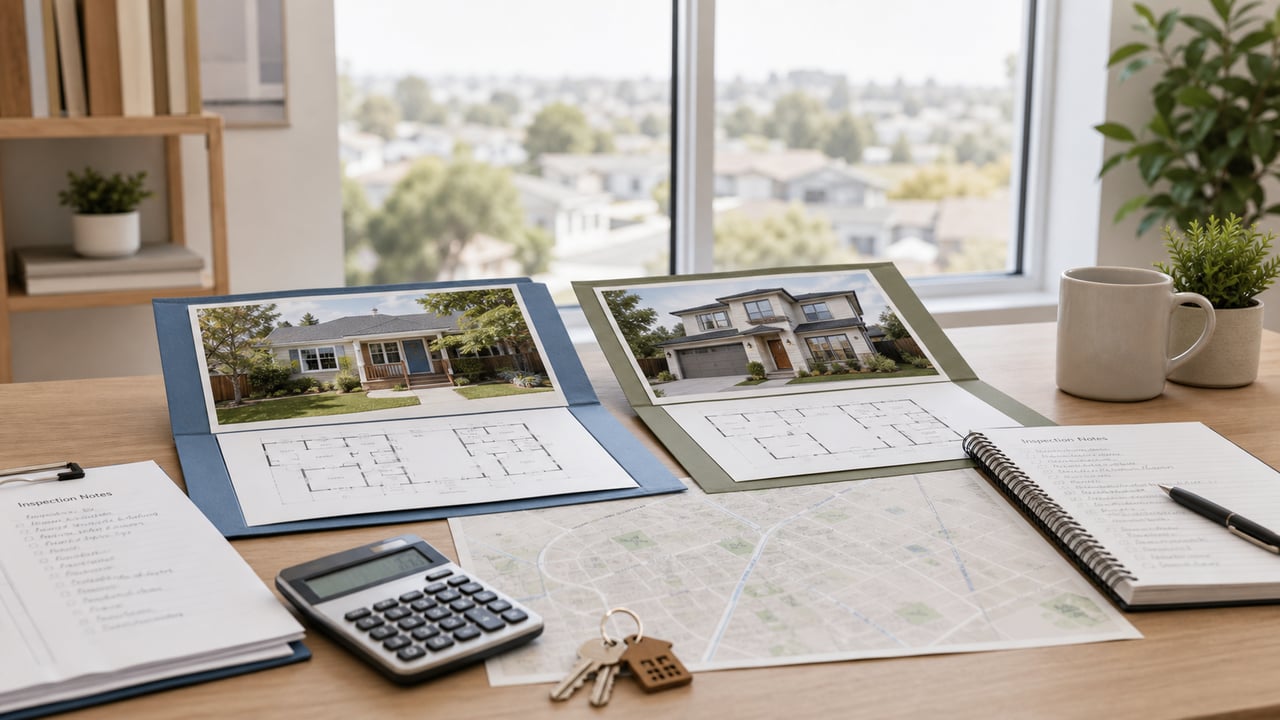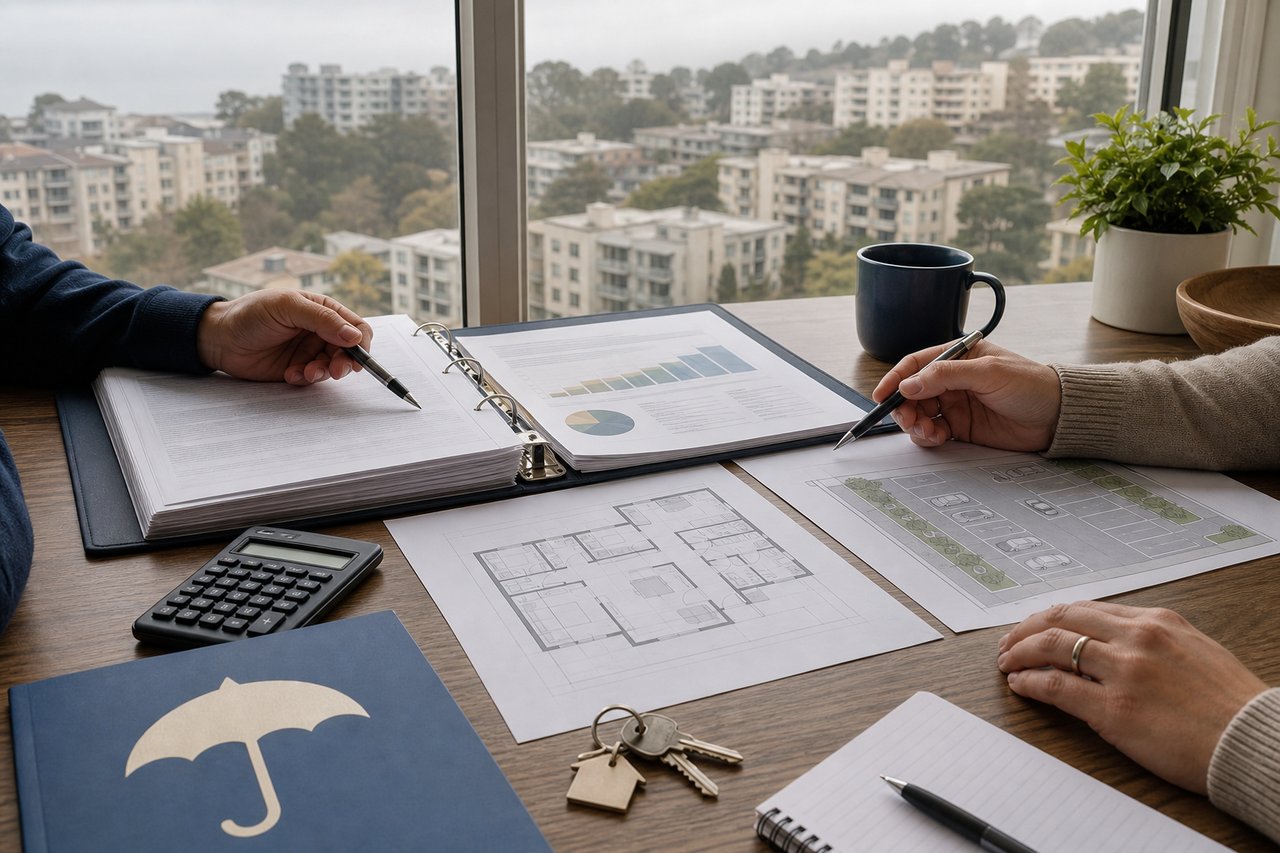
A Daly City condo can look straightforward during a showing: the rooms work, the parking appears convenient, and the HOA dues fit the budget. But the purchase includes more than the unit. You are also buying into a shared financial and maintenance system.
Two similar units can therefore carry different obligations. One association may have current reserve planning and clear responsibilities; another may be discussing repairs, an insurance change, or a special assessment that is not obvious during a tour.
The practical approach is to evaluate three things separately: the unit, the building or project, and the financing path. All three need to work before the purchase makes sense.
1. Read the HOA package for decisions, not volume
HOA disclosure packages can be hundreds of pages. Do not stop after reading the current dues.
California DRE reminded agents and buyers in an August 21, 2026 update that a common-interest-development purchase involves information that cannot be observed during an inspection. Documents provided under Civil Code section 4525 can include governing documents, the annual budget report, assessments, unresolved violations, rental restrictions, requested board minutes from the previous 12 months, and the most recent applicable exterior-elevated-element inspection report.
Ask: What could change my cost, use of the unit, or ability to sell or refinance later? Flag unclear language for the appropriate attorney, insurance professional, lender, HOA representative, or inspector.
2. Connect the reserve study to actual building components
A reserve balance alone does not show whether an association is financially prepared. Compare the reserve study with the roof, exterior, shared plumbing, elevators, balconies, paving, drainage, and other major components the association maintains.
For associations covered by California Civil Code section 5550, the law requires a visual inspection of accessible major components at least once every three years and an annual board review of that study. Ask:
- Which major projects are expected during the next several years?
- Are cost and useful-life assumptions current?
- How much is currently funded, and what contribution plan is in the budget?
- Have projects been delayed or discussed in minutes without reaching the budget yet?
Do not reduce the review to one percentage. The funding plan should match the project's components, condition, and planned work.
3. Treat special assessments as a timing question
A special assessment is not automatically a reason to reject a condo. Understand the amount, purpose, status, payment schedule, and responsibility at closing.
Determine whether it has been proposed, approved, billed, or paid; whether the work is fully scoped; and whether more phases are being discussed. Confirm in the contract and escrow instructions how any current assessment will be allocated.
Also compare the likely assessment with the cash you intend to retain after closing. A buyer who uses nearly all available funds for the down payment may have less room for an unexpected HOA obligation, a unit repair, or a move-in expense.
4. Review the master policy and your unit coverage together
Condo insurance has two connected layers. The association generally insures the structure and common areas. A unit-owner policy commonly addresses personal property, loss of use, liability, and interior items assigned to the owner under the governing documents.
The California Department of Insurance advises owners to understand the association's coverage and its effect after a loss. Ask an insurance professional to review the master policy, deductibles, exclusions, limits, and proposed unit policy. Ask how water damage, loss assessment, earthquake, and temporary living expenses would be handled; do not assume automatic coverage.
Obtain this review early enough to respond if coverage or lender requirements create a problem.
5. Ask the lender to review the project early
Borrower qualification is only one side of a condo loan. The lender may also need to review the condominium project.
Fannie Mae's current standards identify project-level concerns including financial stability, deferred maintenance, litigation, insurance, budgets, and reserves. The review depends on the loan program, occupancy, down payment, project, and lender.
Tell the licensed lender early that the property is a condominium. Ask what documents and review method apply and what could delay approval. Austin is a former mortgage loan officer and a real estate agent with financing experience; he does not originate loans or determine qualification.
6. Verify parking, storage, and use rights
Parking can be part of daily life and part of the legal package. Confirm whether a space is deeded, assigned, exclusive-use common area, or simply available under current rules. Compare the listing, preliminary title report, condominium plan, CC&Rs, and HOA records.
Verify the space in person. Check dimensions, access, guest parking, storage, electric-vehicle charging rules, and relevant restrictions. Do not rely only on marketing materials.
7. Check Daly City records and the physical building
Daly City provides an online permit-record search. Its Residential Requirements Report, or 3R, applies to residential property of three units or fewer, so do not assume every condo includes one. When applicable, the city says it identifies legal use plus permit, enforcement, and zoning history; permit listings generally date from January 1989. The city cautions that it does not reveal unpermitted improvements.
Compare city records with disclosures, HOA documents, title, and inspections. Review the unit and common components, including windows, exterior walls, roof, drainage, shared plumbing, garage, balconies, elevators, and signs of water intrusion. Confirm owner and association responsibilities.
Use one decision sheet before you remove contingencies
Summarize the review on one page:
- Current dues, included services, and recent increases.
- Reserve-study projects, timing, and funding plan.
- Proposed or approved special assessments.
- Master insurance, unit coverage, deductibles, and exclusions.
- Litigation, deferred maintenance, and major repairs.
- Lender project-review status and outstanding documents.
- Parking, storage, restrictions, permits, and inspection findings.
Every building needs work. The objective is to understand the responsibilities, timing, and financial plan before they become yours.
Frequently Asked Questions
What HOA documents should a Daly City condo buyer review?
Review the CC&Rs, bylaws, rules, annual budget report, financial statements, reserve study, insurance summary, current and approved assessments, recent board minutes, applicable inspection reports, rental restrictions, and litigation disclosures. Ask appropriate professionals to explain legal, financial, insurance, or technical issues.
Does a healthy reserve balance guarantee there will be no special assessment?
No. A reserve balance must be compared with the components the HOA maintains, their remaining useful lives, estimated project costs, current funding plan, and any work not fully reflected in the study.
Can a lender approve me but reject the condo project?
A lender may determine that a borrower qualifies while project documentation or eligibility remains unresolved. Project review varies by loan program and lender, so provide the condo information early and ask the licensed lender what remains outstanding.
Does every Daly City condo receive a 3R report?
No. Daly City states that its 3R requirement applies to residential property of three units or fewer. Ask whether it applies to the specific property and use city permit searches, disclosures, HOA records, title information, and inspections as appropriate.
Is a special assessment always a deal breaker?
Not necessarily. Understand its purpose, amount, approval status, payment schedule, work scope, and allocation at closing. Then evaluate the assessment with your available cash, financing, and risk tolerance.